







Quick Answer: Homeowners judge a service business by the recency and detail of its reviews, how the owner responds, visible credentials and consistent contact details. Honest, steady habits build these signals over time.
It is the first heat wave of the summer, and a family’s air conditioner stops cooling at 4 p.m. on a Friday. One parent searches on a phone, opens three HVAC companies in separate tabs and makes a decision within about five minutes. Price rarely decides that first call. Trust does. So what exactly are they looking at?
The Signals Customers Notice First
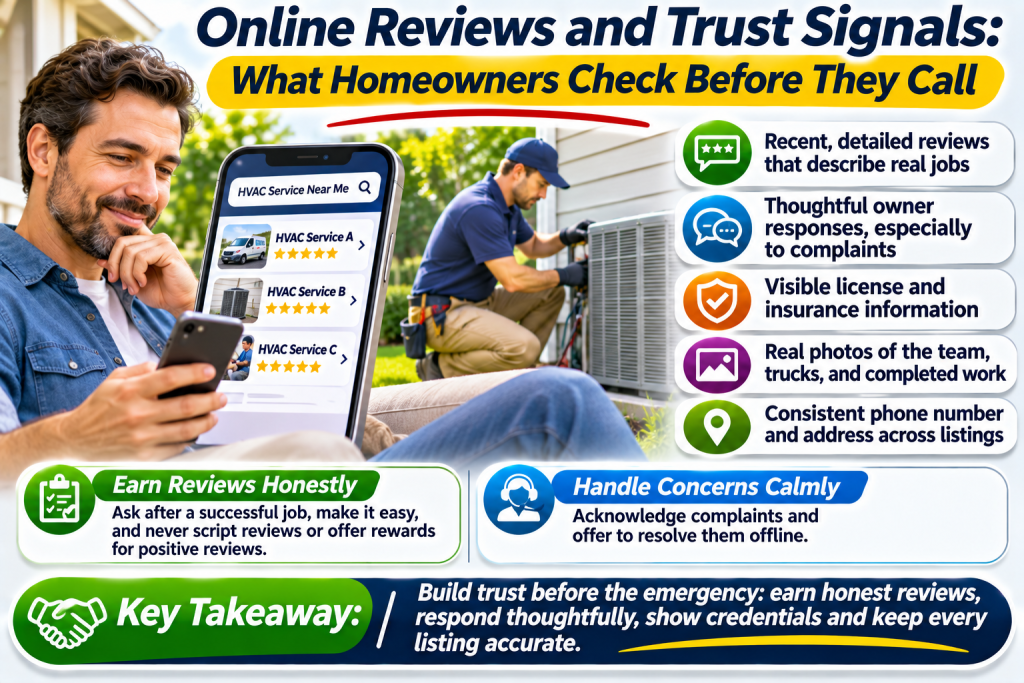
Star ratings get the first glance, but most people look past the average. They notice how many reviews a company has, how recent they are and whether they describe real jobs. “Fixed our AC the same evening and explained the problem” carries more weight than a row of one-word reviews.
Other trust signals matter as well:
- Thoughtful owner responses, especially to complaints
- License and insurance information where customers can see it
- Real photos of your team, trucks and completed work
- The same phone number and address on every listing
Ask for Reviews the Right Way
Most satisfied customers will leave a review if you ask at the right moment and make it easy. Ask in person after a successful job, then send a short text or email with a direct link. Do not script what they should say.
Stay on the right side of the rules. The Federal Trade Commission’s rule on consumer reviews, in effect since October 2024, bans fake reviews and rewards that depend on a review being positive. Review platforms have their own policies, and Google, for example, does not allow businesses to offer incentives for reviews. Never ask only happy customers to post while steering unhappy ones elsewhere.
Handle Negative Reviews Calmly
A thoughtful reply to a complaint can reassure readers more than another five-star review. Thank the customer, acknowledge the issue without arguing, and offer a direct way to resolve it offline. Then actually follow up.
Make sure every place customers compare you tells the same consistent story. Homeowners browsing HaHa Directory’s Air Conditioning and Heating category often check the listing, then your reviews, then your website before calling. Mismatched details at any step can raise doubts.
Trust Is Built Between Emergencies
The homeowner with a broken AC decides quickly, but the signals they use took months to build. Ask for honest reviews after every good job, reply to every complaint, show your credentials and keep your HaHa Directory listing and other profiles accurate. When the next heat wave arrives, that steady work is already in place.
Frequently Asked Questions
How many reviews does a small business need?
There is no magic number. Customers generally care more about recent, detailed reviews than a large total from years ago. A steady flow of new reviews each month usually looks more trustworthy than a big batch followed by silence. Focus on asking every satisfied customer consistently rather than chasing a specific count.
Should I respond to every review, even short positive ones?
Responding to most reviews is a good habit. A brief, personal thank-you to positive reviews shows you pay attention, and it does not need to be long. Prioritize negative and mixed reviews, though, because future customers read those replies closely to see how you handle problems.
Can I ask a customer to change or remove a negative review?
You can work to resolve the customer's problem, and some people choose to update their review afterward. Avoid pressuring them or offering money or discounts in exchange for removing or changing it. Federal rules and platform policies restrict that kind of exchange. Fix the issue first, and let the customer decide what to do next.
Is it okay to show online reviews on my own website?
Generally yes, as long as you quote them accurately, credit the source and do not edit their meaning. Check the review platform's terms, because some prefer you use their official widgets. Avoid showing only glowing reviews while claiming they represent all feedback, since selective presentation can mislead customers.